
The single best thing you can do to improve your Madeira holiday is rent a car. The island's best experiences — the north coast road, the mountain viewpoints, the levada trailheads, the remote fishing villages — are only accessible by private transport. Buses exist but are infrequent, and taxis add up fast over a week of exploration. This guide tells you what to expect on Madeira's roads, how to avoid the gotchas, and the routes that make driving here genuinely memorable.
💡 Tip: Quick Answer: Yes, rent a car in Madeira. Roads are generally good but mountain routes can be narrow and steep. The island's tunnel network (VER Via Expresso Regional) makes getting around faster than you'd expect. Drive defensively, especially on the north coast ER101.
**Quick Answer:** Yes, you should rent a car in Madeira. Most of the island's best experiences — the north coast, levada trailheads, mountain viewpoints — are not accessible by public transport. Roads are well-maintained but can be steep and narrow. Drive cautiously, especially in mountain villages.
Table of Contents
- Should You Rent a Car in Madeira?
- Road Conditions Overview
- Madeira's Road Network Explained
- What to Expect Driving in Madeira
- Best Scenic Routes
- Parking Tips
- Car Rental Tips
- Alternatives to Driving
- FAQ
Should You Rent a Car in Madeira?
Short answer: yes, for almost everyone. Madeira is a mountainous island with a road network designed around private car use. The main expressway (VER) is fast and well-maintained, but the interesting parts of the island — the places where Madeira actually reveals itself — are reached by smaller roads that buses don't serve regularly.
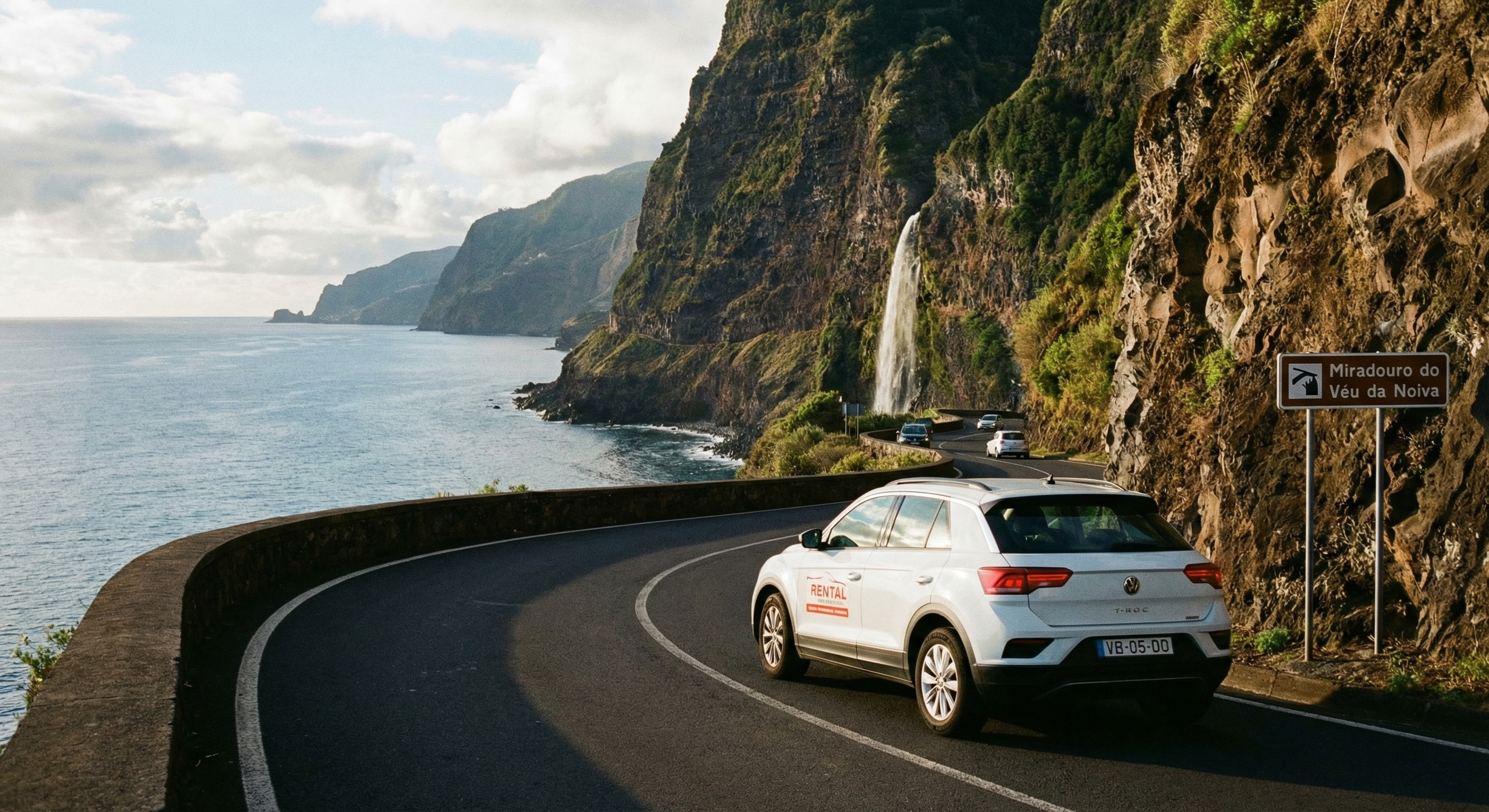
Driving Madeira's coastal roads is one of the great pleasures of visiting the island — the expressways are modern and well-signed, and even the winding mountain routes are mostly tarmaced. The views from the road are often as good as the viewpoints themselves.
If you're staying in Funchal for your entire trip and primarily want to see the city, you might manage without a car (the urban bus network is decent). But if you want to drive to Pico do Arieiro, stop at viewpoints on the north coast, reach levada trailheads, or simply follow a road because it looked interesting on the map, you need a car.
Compare Madeira Car Rentals
Book through Discovercars to compare every rental company at Funchal airport. Typically 20–30% cheaper than booking direct, with full insurance and free cancellation.
Compare Car RentalsadRoad Conditions in Madeira
Madeira's roads range from excellent (the VER expressway tunnels and main roads) to challenging (narrow mountain lanes and the old north coast road). Here's what you'll actually encounter:
Expressways (VER — Via Expresso Regional)
The VER is a remarkable feat of engineering — a network of expressways and tunnels that connects the main parts of the island at motorway speeds. Long sections run through the island's interior in tunnels, dramatically reducing journey times compared to the old mountain roads. The VER is free to use, well-maintained, and has a 90–100km/h speed limit. You'll be amazed how quickly you can cross the island — Funchal to São Vicente takes under 30 minutes.
Regional Roads (ER)
The ER (Estrada Regional) network covers the rest of the island. Quality varies enormously. The ER101 north coast road between São Vicente and Santana is one of the most spectacular drives in Europe — it also has sections of single-track road clinging to cliff faces with nowhere to pass. The ER roads to mountain viewpoints (Pico do Arieiro, Eira do Serrado) are paved and driveable but steep and winding.
Mountain and Rural Lanes
Accessing some levada trailheads and remote villages requires driving narrow lanes that may be single-track with limited passing places, steep gradients, and unguarded drops on one side. These roads are manageable in a small car with care, but are not appropriate for large vehicles or drivers who aren't comfortable with narrow roads.
Madeira's Road Network Explained
- VER (Via Expresso Regional): The main expressway network — fast, free, mostly tunnel. Use this as your backbone for cross-island travel
- ER101: The historic north coast road — spectacular but narrow and winding. The section between Ribeira da Janela and Seixal has been dramatically improved with new tunnels
- ER101 south coast: Between Funchal and Câmara de Lobos, the ER101 coastal road is wider and easier
- Mountain roads: All roads to Pico do Arieiro, Paul da Serra, and Eira do Serrado are paved but steep
- EN (Estrada Nacional): Older national roads, now largely superseded by the VER but useful for village access
What to Expect Driving in Madeira
Driving in Madeira requires more concentration than driving on flat roads. The terrain means roads constantly climb, descend, curve, and narrow. Here's what first-time visitors find most surprising:
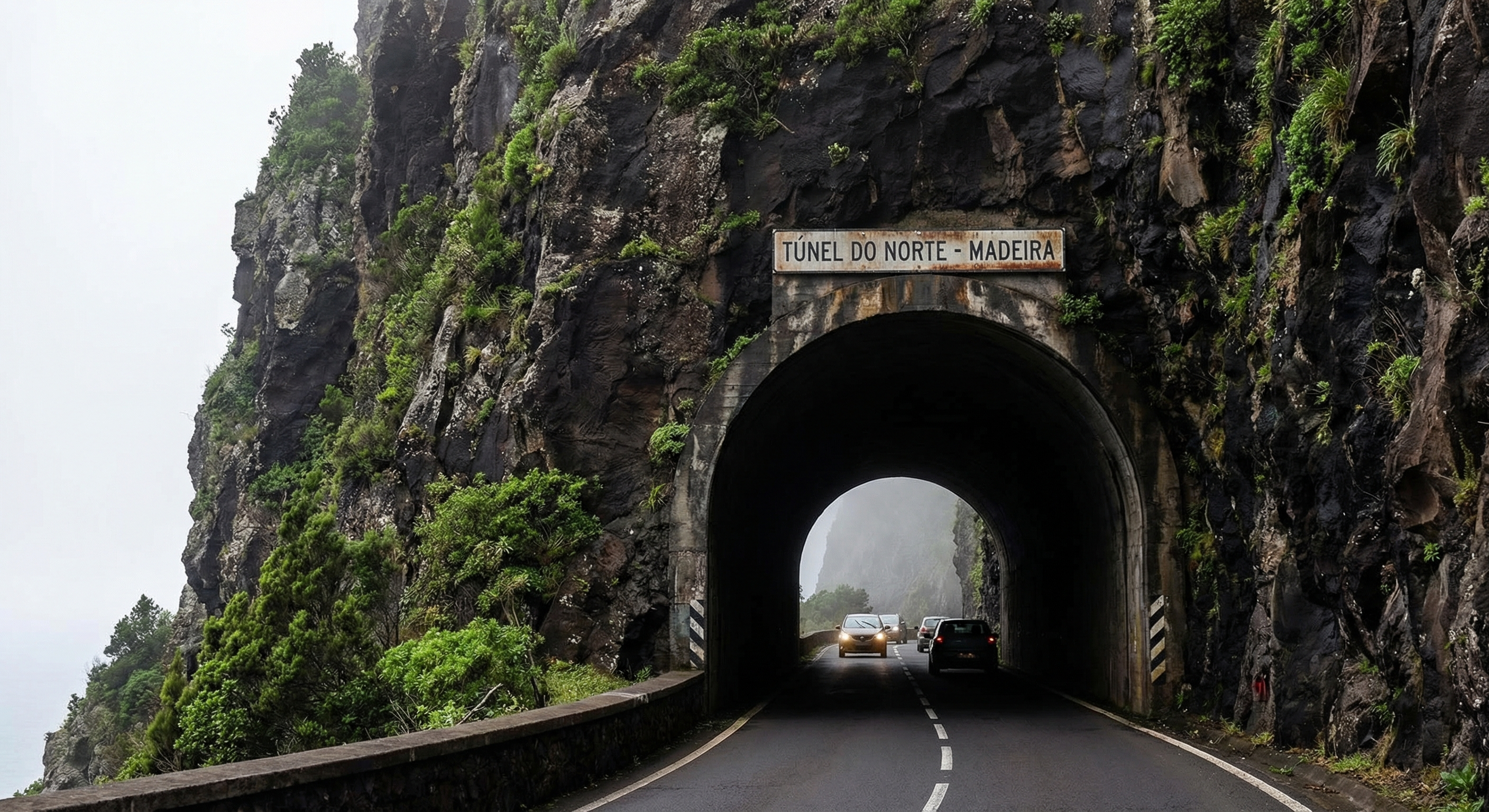
Madeira's tunnel network is extraordinary — hundreds of tunnels pierce the volcanic mountains, connecting valleys that were once hours apart. The longest tunnel runs 3km through solid rock. Driving through them is part of the Madeiran experience, though some visitors find the narrow, unlit entrances alarming at first.
- Tunnels everywhere: The VER tunnel network is extensive — some tunnels are several kilometres long. They're well-lit and straightforward, but the abrupt light changes take getting used to
- Roundabouts: Madeira has an enormous number of roundabouts, including multi-level roundabout stacks at major junctions. Priority is to traffic already on the roundabout
- Parking on slopes: Madeira's roads often slope significantly. Always engage your handbrake fully and turn your wheels into the kerb when parking on a hill
- Passing on narrow roads: On narrow mountain roads, pull in when you see an oncoming car and wait for them to pass. Locals are generally patient with tourists navigating unfamiliar roads
- GPS reliability: Navigation apps work well on Madeira, but be aware that some routes suggested by GPS involve very narrow roads. Waze tends to be more accurate than Google Maps for local conditions
- Motorcycles and cyclists: The mountain roads are popular with motorcyclists and, increasingly, cyclists. Give them space especially on blind corners
Best Scenic Drives in Madeira
The North Coast Drive (ER101)
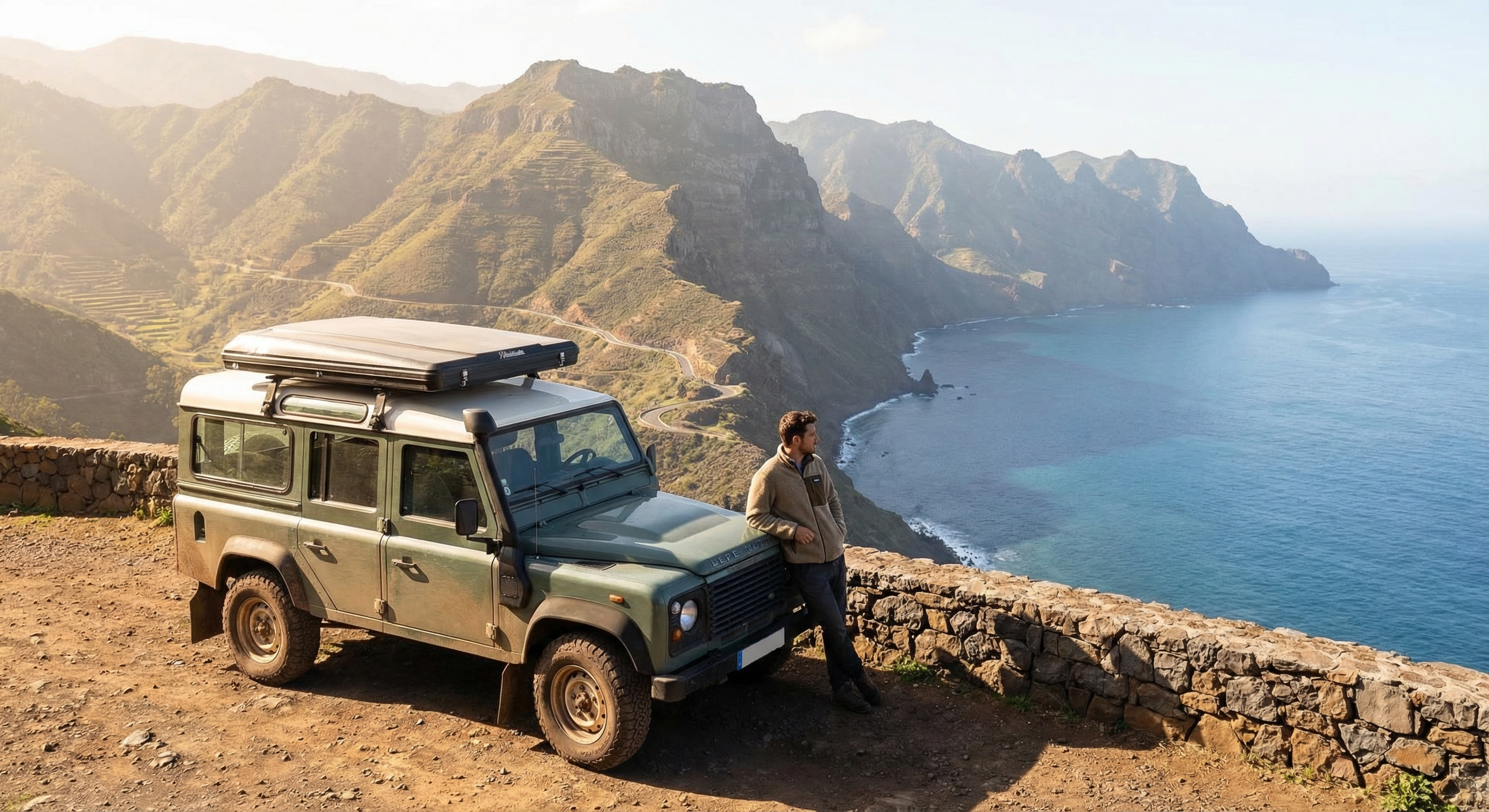
Some of Madeira's best viewpoints are only accessible by car — pull over, turn off the engine, and let the view do the work. The island rewards the spontaneous stop: around almost every corner is another extraordinary perspective on the mountains or the ocean.
Start from São Vicente and drive east along the north coast to Santana. The road clings to the cliff face above the Atlantic — at times the drop to the sea below is vertiginous. Stops include the São Vicente volcanic caves, the black sand beach at Seixal (accessible via new tunnel), Porto Moniz natural lava pools, and the Fanal forest on the way back via Paul da Serra.
Central Mountain Circuit
From Funchal, drive north through the VER tunnels to Ribeiro Frio, then follow the mountain road to Boca da Encumeada (both-coasts viewpoint), then west across the Paul da Serra plateau (a highland plateau unlike anything else on the island), then north to São Vicente. Return via the north coast or the VER. Allow a full day.
Eastern Madeira Loop
Drive east from Funchal along the south coast motorway to Machico, then north to Porto da Cruz, along the scenic northeast coast road, stopping at Faial (the eagle's beak rock arch), then return via the VER. Combine with the Ponta de São Lourenço hike for a full day in the east.
Parking Tips for Madeira
- Funchal centre: Mix of paid parkings (€0.80–1.50/hour, displayed on blue signs) and multi-storey car parks (€1–2/hour). The Forum shopping centre car park is convenient for the market area
- Levada trailheads: Most have free parking areas. The Rabacal plateau (for 25 Fontes) has a large free car park — the shuttle bus to Rabacal itself departs from here
- Mountain viewpoints: Pico do Arieiro has a large free car park. It fills up for sunrise in summer — arrive by 6am on summer weekends
- City parking disc: For blue-zone street parking, you need a parking disc (disco de estacionamento) — available free from car rental companies or from the Câmara Municipal office
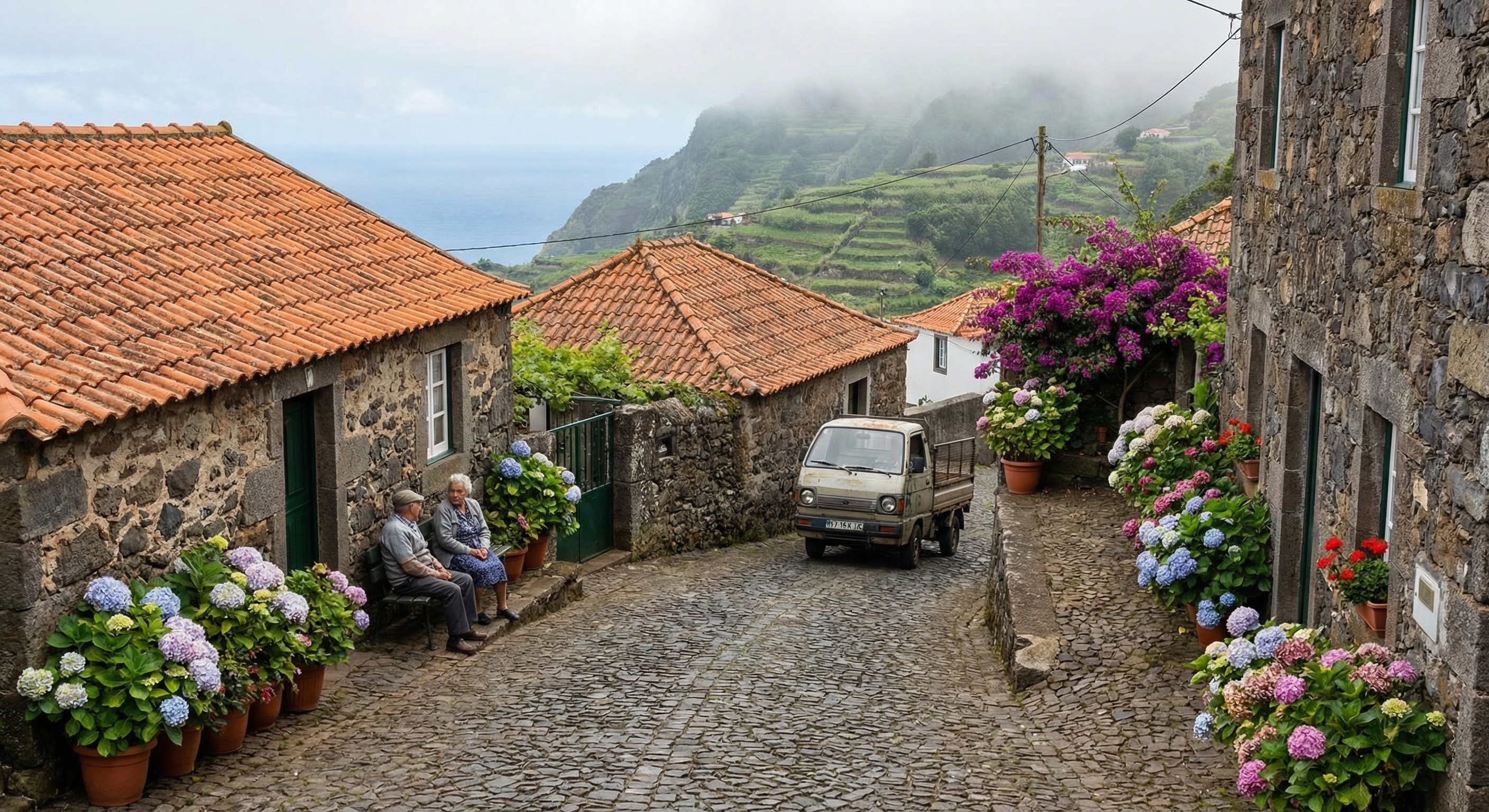
Madeira's mountain villages were built centuries before cars — the streets are often barely wider than a single vehicle. Drive slowly, use your horn on blind corners, and don't be too proud to reverse. Locals are patient with tourists who take their time.
Car Rental Tips for Madeira
- Book in advance, especially for July and August — the island has limited fleet and prices rise significantly
- Consider a smaller car: Narrow mountain roads and tiny village alleys are much easier in a compact car. The upgrade to a larger SUV is rarely worth it
- Check insurance carefully: Basic rental insurance often has high excess charges. Full coverage (CDW + TP) is worth the extra €5–15/day for peace of mind on narrow roads
- Inspect the car thoroughly: Photograph all existing scratches before you leave the lot. Narrow roads occasionally result in minor scrapes
- Fuel: Most petrol stations in Funchal are near the main road network. Fill up before heading into the mountains — stations are rare on the north coast
- Book with local companies: Local Madeiran rental companies (Auto Jardim, Rodavante) are often cheaper than international chains and have good customer service
Alternatives to Driving in Madeira
If you don't want to drive, organised tours are the most practical alternative. Full-day jeep tours cover the island's highlights with a driver and guide — typically €50–80 per person including transport from Funchal.
Book a Full-Day Jeep Tour
Don't want to drive? A full-day jeep tour covers Madeira's highlights with an experienced local driver. Browse top-rated tours on GetYourGuide with free cancellation.
Browse Jeep Toursad
